
Drawlah: Helping Every Mind Be Understood
Strategic Whitepaper: A 3-Year Roadmap for Cognitive Infrastructure in Global Education and Enterprise
Drawlah makes it easy for you to see your ideas clearly and share them visually, because everyone deserves to be understood — lah.
1. Executive Summary: The "Thinking Layer" for Global Communication
Drawlah is an innovative app that redefines the “Thinking Layer” for Global Communication. Officially launched in January 2026, the platform utilises a proprietary Minimalist Visual Syntax to bridge the widening gap between complex abstract thought and human comprehension. Unlike traditional Generative AI tools that emphasise decorative art, Drawlah centers on Architectural Logic to enhance human understanding.
As an app, Drawlah is described as "ChatGPT for Visual Logic" —allowing anyone to transform complex, abstract thoughts into clear, sketchnote-style doodles as easily as sending a WhatsApp message.
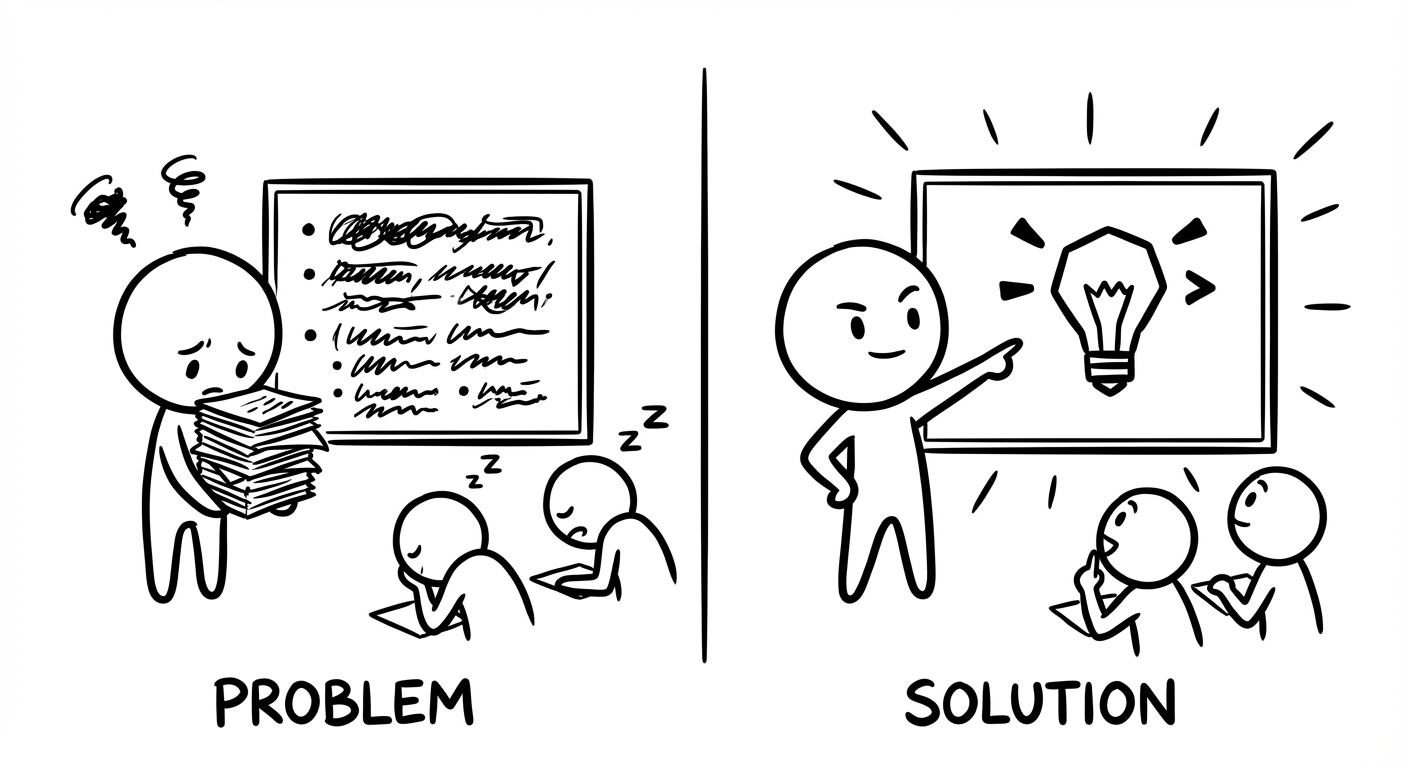
However, Drawlah offers a critical advantage over standard GPTs. While generic models excel at text processing and high-gloss "decorative" imagery, they often fail to maintain the structural integrity of a business idea. Drawlah provides Structural Intelligence: it removes the aesthetic noise and "hallucinations" of typical AI art to ensure your logic remains unshakeable. It is the transition from AI that "makes art" to AI that "thinks architecturally."
Our mission is to facilitate One Million Innovative Ideas by 2029. We provide the Shared Mental Map necessary to turn neurodivergent traits—ADHD curiosity, Dyslexic depth, and Autistic logic—into a new standard of high-clarity leadership. We are building a world where "being understood" is a universal human right.
2. The Macro Problem: The "AI-Driven Text Crisis"
The proliferation of Large Language Models (LLMs) has led to an exponential increase in text-based noise. Microsoft CEO Satya Nadella noted, "We are moving from a world where computing power was scarce to a world where human attention is the scarcest resource."
2.1: The AI-Driven Text Crisis (Foundation)
This "Text Tax" creates a cognitive bottleneck in enterprise execution and results in passive "checked-out" silence and face-saving hesitation in boardroom environments. Human attention is being drained by decoding information rather than taking decisive action and driving high-impact results, while the cultural fear of makan hati or appearing incompetent prevents team members from asking for the clarity they need.
2.2: The Regional Compliance Mandate
In Southeast Asia, the legal landscape for neuro-inclusion is shifting. Under Malaysia’s Act 685 and Singapore’s TAFEP Guidelines, MNCs are required to provide 'Reasonable Accommodations.' Drawlah serves as the Visual Infrastructure for Compliance, allowing firms to meet these standards while simultaneously increasing operational efficiency by bypassing the symbolic bottleneck of text in as little as 13 milliseconds.
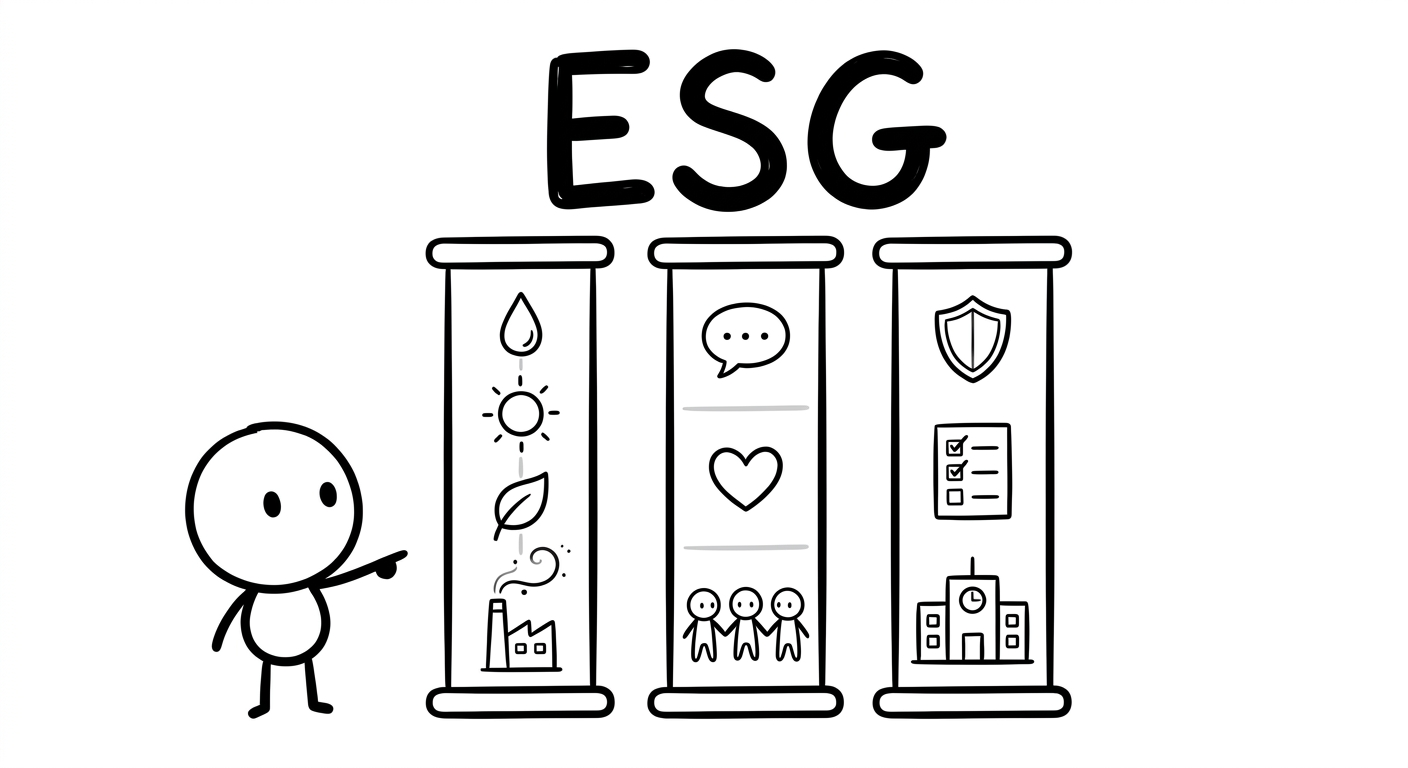
Drawlah as Cognitive Infrastructure for ESG (SEDG)
Drawlah serves as a critical bridge for organisations navigating the "Jargon Trap" of ESG reporting. Specifically, it aligns with the Social (S) and Governance (G) pillars of the SEDG v2 framework.
1. Pillar: Social (S) – Driving Neuro-Inclusive DEI
Under Disclosure S3.1 (Diversity and Inclusion), organisations must report how they foster an inclusive culture. Drawlah transforms this from a generic statement into a measurable Visual Cognitive Infrastructure.
- The Impact: By converting text-heavy policies into Logic Skeletons, firms provide "Reasonable Accommodations" for neurodivergent employees (ADHD, Dyslexia, Autism), ensuring that 100% of the workforce has equal access to strategic information.
- Reporting Metric: Organisations can report the percentage of internal Standard Operating Procedures (SOPs) or DEI modules delivered via visual logic to ensure cognitive accessibility.
2. Pillar: Governance (G) – Eliminating the "Jargon Trap"
Disclosure G4.1 (Anti-Corruption) and G2.1 (Policy Commitments) require evidence that employees actually understand ethical standards.
- The Impact: Most governance failures stem from a lack of clarity. Drawlah converts complex legal requirements, such as MACC Section 17A, into 3-second blueprints that are easily understood across all levels of the organisation.
- Reporting Metric: Companies can utilise Drawlah to track comprehension and recall rates of governance policies, providing audit-proof evidence that their "G" pillar is functional, not just decorative.
3. Pillar: Governance (G) – Visual Risk Management
Disclosure G3.1 (Risk Management and Reporting) asks how a company identifies and manages sustainability risks.
- The Impact: Drawlah helps leadership teams conduct "Risk Sessions" that aren't buried in spreadsheets. By mapping out Climate-related physical and transition risks visually, stakeholders can identify "blind spots" that text-based reports often miss.
- Reporting Metric: Use Drawlah to document materiality assessments and risk-mapping workshops as a "Shared Mental Map" for investors and auditors.
3. Proprietary Capability: The Architecture of Explanation
Drawlah’s competitive moat is its Proprietary Instruction Layer, developed over 15 years in high-stakes branding. We convert abstract corporate and industry jargon into high-utility "Logic Anchors" based on validated, real-world frameworks.
3.1: Visual Identity System (The Brand Soul)

To ensure our visual logic is as relatable as it is professional, we have established a witty and bold identity:
- Logo Mark: The Toucan — Symbolising boldness with ideas and a witty, playful nature.
- Visual Style: "Architectural Sketchnote Doodles" — Hand-drawn with a Sharpie-marker aesthetic. This bold line weight signals unshakeable logic and permanent clarity.
- Colour Palette: Architectural Black (#000000), Clarity Yellow (#FFB53D), and Insight Ivory (#FFFEF6), accented by Sage Alignment (#CCE9EA) and Emphasis Orange (#F7921D).
- Typography: Caveat Brush (Headings) for a human touch; Alan Sans (Technical/Body) for professional readability.
3.2: The "Founder-Led" Technical Roadmap
Drawlah transitioned from concept to reality through a founder-built MVP. With seed funding, we will transition from a "Logic Layer" to a Proprietary Fine-Tuned Model (LoRA), baking the founder's 15 years of expertise directly into the model’s DNA.
4. The "Curb-Cut" Growth Strategy: Cognitive ESG
Drawlah utilises a Universal Design approach. We believe diverse cognitive traits are strategic leadership assets.
4.1: Cognitive Accessibility
Drawlah acts as a neural shortcut, communicating via spatial logic rather than symbolic decoding. By reducing the "Text-to-Task" load, we enable neurodivergent talent to lead with clarity.
4.2: Support Vectors
Our engine provides specific logic scaffolding for ADHD (Focus Anchors), Dyslexia (3D Visual Logic), Autism (Literal Visual Syntax), and Dysgraphia (Handwriting Decoupling).
4.3: The "S" and "G" in ESG – Auditable Neuro-Inclusion & Governance
We are working on the development of in-house tools to provide corporations with a measurable way to report on the "Social" and "Governance" pillars of ESG. By adopting Shared Mental Maps, firms "clear the fog" from complex strategy and quantify the reduction in cognitive load, turning DE&I from a vague sentiment into a transparent, board-ready metric.
A. Supporting the Social (S) Pillar: Cognitive Equity
- Reasonable Accommodation: Drawlah acts as a "Visual Voice" for the 20% of the workforce that is neurodivergent. By providing visual logic as an alternative to dense text, firms meet compliance standards (Act 685/TAFEP) while reducing "Makan Hati"—the silent frustration felt by employees struggling with vague instructions.
- Burnout Prevention: We address "Digital Exhaustion" by simplifying the cognitive load of internal communications, leading to higher talent retention and improved employee well-being scores.
B. Supporting the Governance (G) Pillar: Strategic Transparency
- Making Complexity Clear: Governance requires that all stakeholders, not just technical experts, understand corporate risk and strategy. Drawlah visualises the "Logic Skeletons" of board-level decisions, ensuring transparency across the entire hierarchy.
- Ethical Communication: By standardising visual clarity, organizations ensure that information is accessible to every mind, regardless of their linguistic background or cognitive style.
C. Measurement & Reporting Tools
To enable auditable ESG reporting, Drawlah is developing a specialised toolset for HR and ESG leads:
- The Cognitive Load Dashboard: A diagnostic tool that analyses internal documentation to measure its "symbolic density." It provides a pre- and post-conversion score showing the reduction in the "Text Tax."
- TTU (Time-To-Understand) Tracker: An analytics layer that measures how quickly teams align on visual logic maps compared to traditional text-heavy memos.
- Inclusion Impact Surveys: Embedded feedback loops that capture qualitative data on how visual anchors improve the confidence and productivity of neurodivergent staff.
- Automated ESG Report Generator: A feature that exports visual proof and quantified efficiency data directly into a format ready for annual sustainability and social impact disclosures.
5. Market Opportunity: Quantifying the Logic Gap
Drawlah sits at the intersection of two massive global shifts:
- Productivity Software ($70B TAM): Targeting users moving away from stock-heavy decks toward bespoke visualisation.
- SPED Technology ($30B TAM): Providing a non-verbal cognitive bridge for accessible learning.
- The Competitive Edge: While Canva and Miro focus on the "Facade" (pretty), Drawlah owns the "Structure" (function).
6. Potential for Collaboration: Advancing the Science of Understanding
We are seeking to collaborate with experts in Ethical AI, Educational Psychology, and Neuroscience to establish our Evidence Vault. This repository will document the specific improvements in long-term memory and cognitive load reduction when abstract concepts are paired with Drawlah’s logic-based visuals.
7. Sustainability & The Enterprise Growth Engine
While Phase 1 focuses on 1,000 early adopters via the "Star Plan," our transition to a B2B SaaS model ensures long-term sustainability:
- Strategic MNC Workshops: Serving as a "Trojan Horse" to build trust and secure enterprise licenses.
- Team-Based Subscriptions: Our primary revenue engine, embedding Drawlah as the internal standard for corporate communications.
- Quantified Commercial Model: Targeting $50,000 ARR via 10 foundational MNC pilots in Year 2.
8. The 3-Year Strategic Roadmap (2026–2028)
- Year 1 (2026): Operational Foundation Onboarding the first 1,000 "Star Plan" users. Focusing on perfecting the self-service journey and automating the content engine.
- Year 2 (2027): Institutional Authority & Pilots Securing 10 MNC pilots for "Cognitive ESG" auditing. Commencing development of the formal Visual Cognitive Infrastructure Curriculum in-house.
- Year 3 (2028): Global Scaling & Investment Scaling the Student Initiative to 50,000 learners in KL and Singapore. Transitioning to a proprietary model and securing Angel Investment ($150k - $200k USD) to fund global expansion.
9. Transitioning to a Founder-Led Core Team
While global tech giants focus on the "Designing" phase, Drawlah owns the "Thinking" phase. We are seeking a mission-aligned CTO and Production Support to transition from a solo-creator model to a scalable global standard.
10. Capital Allocation & The Visual Literacy Initiative
- Pillar A: Content Engine (30%) – 300-episode roadmap to own the "Brain-friendly Communication" niche globally.
- Pillar B: Product & Data Moat (35%) – Transitioning to a proprietary fine-tuned model (LoRA).
- Pillar C: Growth & Validation (15%) – Pilot studies to develop the in-house tools and securing Malaysia Digital (MD) Status.
- Pillar D: Student Initiative (20%) – Scaling the Visual Vocabulary Course to 50,000 students to create "bottom-up" demand for Drawlah-native professionals.
Runway: This investment provides a 24-month runway in Kuala Lumpur, taking Drawlah to "Default Alive" status by Year 3.
11. Drawlah in Action: Real-World Architecture
This section illustrates how the Drawlah scaffolding models are applied across different industries to solve specific communication friction points.
A. Technical Translation (The CTO's Tool)
- Scenario: A CTO needs to explain a new microservices architecture to a non-technical board of directors.
- The Drawlah Flow: The user inputs the technical documentation. Drawlah’s Problem-Solution model converts the text into a visual "flow and barrier" map.
- Outcome: The board understands the infrastructure investment through visual logic, reducing meeting time by an estimated 40%.

B. The Alignment Bridge (The HR Director’s Tool)
- Scenario: An HR Director is rolling out a complex new diversity and inclusion policy that feels "too corporate" and impersonal.
- The Drawlah Flow: Using the Everyday Doodle model, the policy is broken down into relatable, human-centric icons and visual metaphors.
- Outcome: Employees report higher emotional resonance and better recall of the policy details.

C. The Cognitive Anchor (The Educator’s Tool)
- Scenario: An educator is teaching neurodivergent students the concept of photosynthesis.
- The Drawlah Flow: Through Educational Scaffolding, Drawlah provides a guided drawing path that links the abstract concept (energy conversion) to a concrete visual (a charging battery for a plant).
- Outcome: Students who struggle with rote memorization achieve higher retention by "building" the concept visually.

Contact Information:
For enquiries or to join our Collective, please contact Dominic at dominic@iwidigital.co.
Prepared by Dominic, Creator of Drawlah and Iwi Digital
(Based in KL, Malaysia)
Last updated: March 2026