Introduction
You have just opened an email from your biggest client. They are asking for your ESG disclosure report by the end of the quarter. If you are quietly searching ESG for Beginners (Malaysia and Singapore) while your coffee goes cold, you are not the only one.
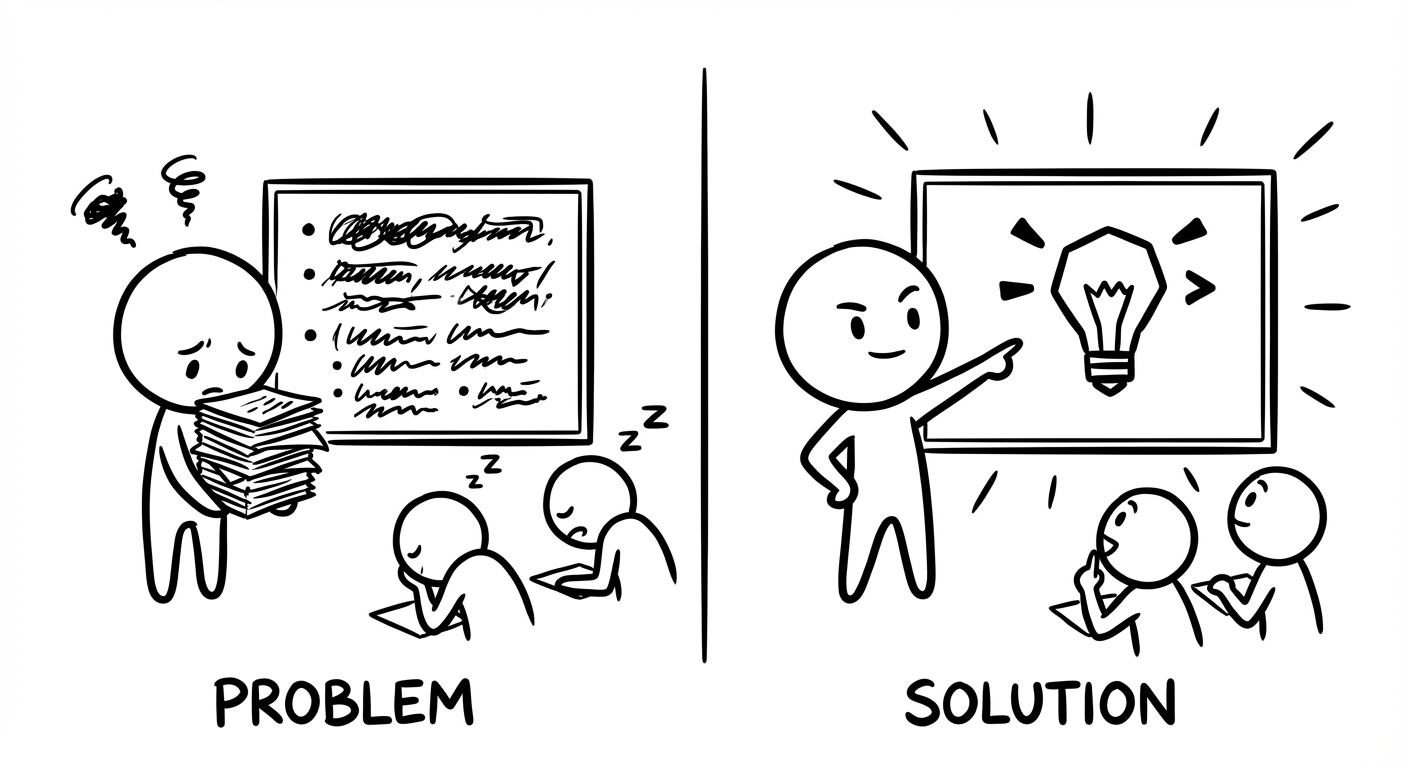
The first thing you hit is a 200‑page PDF. Then another one. Acronyms, charts, and legal phrases pack every page. Very quickly, it stops feeling like Environmental, Social, Governance and starts feeling like a foreign language exam. The problem is not your intelligence. The problem is how ESG communicators communicate ESG to beginners across Malaysia and Singapore.
We call this the Jargon Trap. Your brain shuts down in this moment because walls of text, alphabet soup (ISSB, GHG, TCFD, CSRD), and legal phrasing bury the information. ESG itself is not that complicated. It is the packaging that is hostile.
“If you can’t explain it simply, you don’t understand it well enough.” — commonly attributed to Albert Einstein
By the end of this article, you will have a clear mental blueprint of ESG, a starter roadmap for your SME, and a first step that does not involve another late‑night PDF. You will see why visual thinking is your best friend here. Let us start by naming the real villain that has been slowing you down.
Key Takeaways
- ESG seems frightening primarily because of its dense language and lengthy documents, not because the fundamental concepts are too difficult. When people show information in simple visuals, your stress level drops quickly. That is the core promise behind this ESG for Beginners (Malaysia and Singapore) guide.
- The Jargon Trap silently slows or freezes ESG work for many SMEs in Malaysia and Singapore, even when leaders are motivated to act. Time gets wasted on trying to make sense of wording instead of planning clear steps. That delay now has real business costs as large clients and regulators ask harder questions.
- Logic Skeletons and the Drawlah App from Iwi Digital give you a visual route out of the chaos by turning ESG rules into a Shared Mental Map your entire team can see. This supports Neuro-inclusive Leadership, aligns with ISSB Standards, and builds the Visual Cognitive Infrastructure that modern, cross‑border businesses need.
What Is The Jargon Trap — And Why Is It Killing Your ESG Progress?

Think about the last time you opened a formal ESG guide. The first pages looked fine. Then the acronyms appeared one after another, and your attention quietly slipped away. That mental shutdown is not a personal weakness. This is a design failure in ESG's presentation, especially for beginners in Malaysia and Singapore.
This is the Jargon Trap. This happens when technical wording, long sentences, and diagrams that assume a background in finance or law wrap complex ideas. Your working memory has limited space. Cognitive Load Theory explains that when all that space consumes the effort to decode jargon, there is almost no room left for actual thinking, planning, and decision‑making.
Imagine someone hands you the wiring diagram for a Boeing 737 and says, “Just follow the steps and you will be fine.” That is how many first‑time ESG for Beginners (Malaysia and Singapore) resources feel. Auditors and lawyers built them, not founders, HR directors, or marketing leads who simply need to get started.
Then comes the alphabet soup. Within a few pages, you may see ISSB, GHG, TCFD, CSRD, CBAM, EUDR, SRI, SASB, GRI, CDP and more. While each of these terms is useful in its own context, stacking them together overwhelms your brain. Instead of clarity, you get decision paralysis. You can read more about it towards the end of the blog
In Malaysia and Singapore, this is no longer just a “nice to have” problem. Many SMEs serve multinational clients that now ask for ESG disclosures as part of their supplier checks. If you cannot communicate your ESG readiness in plain language, you risk being dropped from tenders or losing access to certain export markets.
ESG In Plain English: The Three Pillars You Actually Need To Know

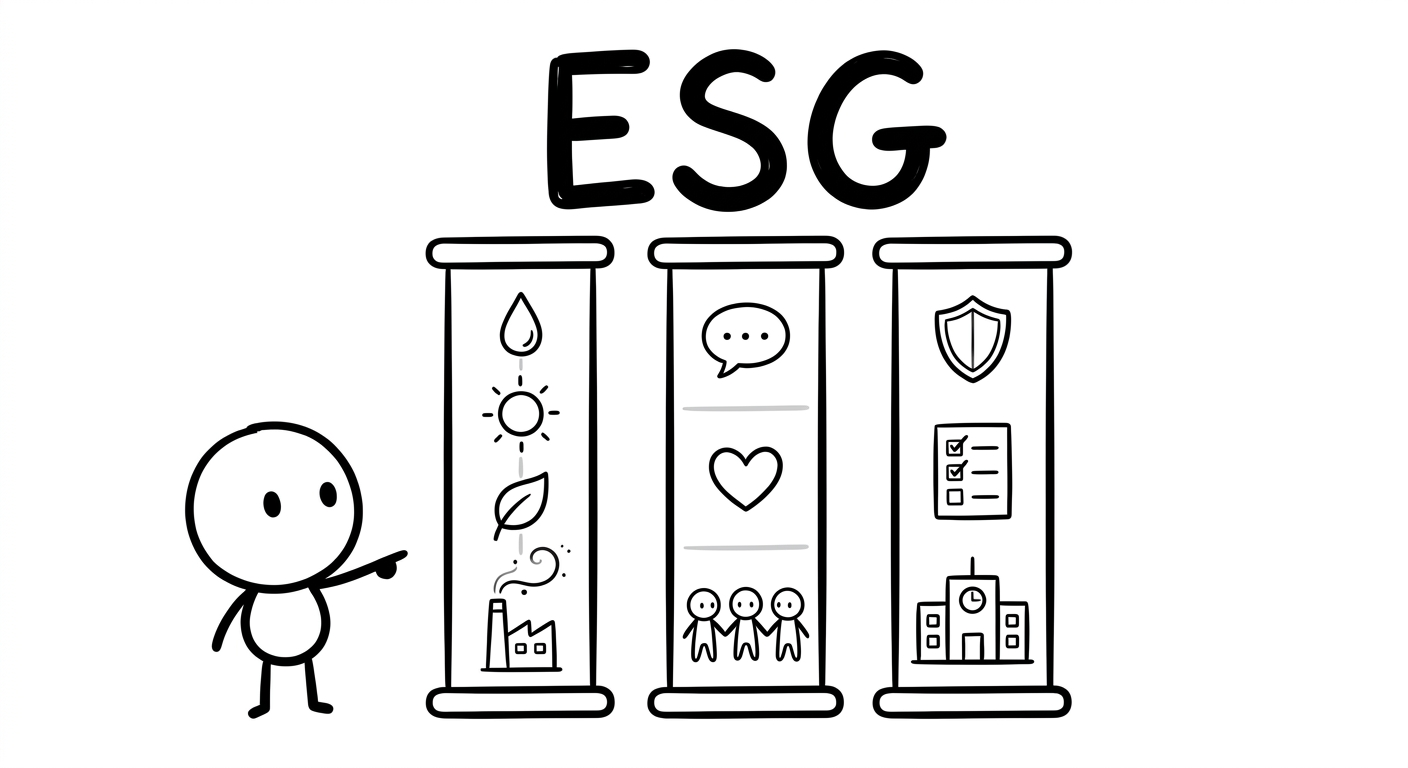
Forget the thick manuals for a moment. At its core, ESG is just three big questions that every business in Malaysia and Singapore has to answer sooner or later. This is the real starting point for ESG for Beginners (Malaysia and Singapore).
Pillar | The Plain-English Question | One Local Example |
Environmental (E) | How does your business affect the planet? | Your factory’s energy use, your office’s waste and recycling habits |
Social (S) | How do you treat the people around your business? | Worker conditions, community projects, Neuro-inclusive Leadership |
Governance (G) | Who is in charge, and do they run things fairly? | Board oversight, anti‑corruption policies, transparent reporting |
When you hear Environmental, think about your real‑world footprint. In Malaysia, the government has committed to cut greenhouse gas emissions intensity sharply by 2030 and target net‑zero by 2050. That ambition filters down into questions about your energy use, your supply chain, and even how you manage waste in a basic office in Petaling Jaya or Jurong.
When you think Social, think about people. It covers:
- Fair pay and safe working conditions
- Respect for migrant workers
- How your company shows up in its community
- Neuro-inclusive Leadership, where team members with ADHD, dyslexia, or other cognitive styles can contribute without drowning in text
Governance is the boring‑sounding pillar that quietly controls everything. It is about who sits on your board, how you handle conflicts of interest, how you speak to shareholders, and whether your reporting is honest. In Malaysia, Bursa’s Listing Requirements already push listed companies to include Sustainability Statements, and similar pressure is rising in Singapore through SGX and ACRA.
You do not need to master every angle of these three pillars on day one. You just need to understand their shape well enough to sketch how your own business fits inside them. That is where Logic Skeletons start to carry the weight for you.
How Malaysia And Singapore Are Finally Speaking The Same Language
Here is some good news. While Bursa Malaysia and SGX/ACRA have different rulebooks and timelines, both sides of the Causeway are aligning around ISSB Standards, especially IFRS S1 and IFRS S2. These standards give a shared baseline for sustainability information and climate disclosure.
For you, this means the ESG logic you build once for a KL‑based business will travel well into Singapore. IFRS S1 covers general sustainability‑related financial information, while IFRS S2 zooms in on climate risks and opportunities. Together, they form a common language that investors, banks, and big clients use across borders. If you can draw the logic for your business in Kuala Lumpur, you are already most of the way ready for Orchard Road.
Your ESG Starter Kit: A Simplified Road Map For SMEs In Malaysia And Singapore

Now that the ideas feel clearer, how do you start in practice? You do not need to change everything at once. You need a simple roadmap and a sketchpad. Think of this section as ESG for Beginners (Malaysia and Singapore) in five grounded steps.
First, read through the steps once. Then pick one client, one product line, or one site in Malaysia or Singapore as your pilot.
Identify Your Material Issues
Think about which ESG topics genuinely matter for your business. A small SaaS company in Bangsar will have very different Environmental questions compared with a manufacturing plant in Johor or Penang. Talk to a few internal people and ask what risks keep them awake at night, whether that is worker safety, data privacy, or energy bills. Those topics become your first short list of material issues to focus on.
- Sketch Your Stakeholder Map
Write down everyone who cares about your ESG performance, from major clients and investors through to regulators, employees, and even nearby communities. Then use a simple Drawlah canvas to place them around your business in a quick map so you can see who is closest to which ESG pillar. This visual gives you a fast sense of whose expectations you need to meet first. It also reveals where you might be over‑communicating or under‑communicating right now. - Choose Your Reporting Anchor
For many Malaysian SMEs, the Simplified ESG Disclosure Guide (SEDG) is the best early anchor. It gives a compact view of what minimum information customers and regulators are likely to expect. As you grow or start serving regional markets, keep an eye on ISSB Standards – IFRS S1 and S2 – because they are becoming the shared base for both Bursa and SGX. The key move is to choose one clear anchor instead of bouncing between five different frameworks. - Communicate Visually, Again And Again
ESG is a continuous cycle rather than a one‑off report. Make a habit of updating your Logic Skeletons when new client requests or policies appear. Share these updated sketches in town halls, board packs, or supplier briefings instead of dropping another long slide deck. Over time, this builds that Shared Mental Map your whole team can rely on and you can use Drawlah to create them.
If you want to see what a mature version of this looks like, take a quiet look at the Sunway Sustainability Report (Google it). It shows how a major Malaysian player structures its ESG story with clear sections and visuals. You do not need to reach that level in your first year, but it is helpful to see what “done clearly” looks like. Your real goal is steady, visible progress that your stakeholders can easily understand.
The Simplified ESG Disclosure Guide (SEDG): Your Survival Cheat Sheet
The Simplified ESG Disclosure Guide (SEDG) is often the best friend of ESG for Beginners (Malaysia and Singapore). It strips away the heavy detail of standards like GRI or full ISSB rules and gives you the minimum pattern of information most SMEs need to report.
You can think of the SEDG as the compact version of the compliance world. It is not a shortcut that lets you ignore responsibility. It is a structured entry point that helps you avoid getting lost before you even start. When you pair the SEDG with a Logic Skeleton of your own business model, you suddenly have both a list of what to share and a picture of how your work fits.
That combination is powerful. It gives you a credible starting ESG position and something concrete to show clients without hiring an expensive sustainability consultant on day one. Iwi Digital’s Drawlah templates are designed to sit right beside guides like the SEDG, so you always have both words and visuals working together.
Conclusion
You have seen that ESG boils down to three straight questions about the planet, people, and how your business is run. You have also seen how Malaysia and Singapore are lining up around ISSB Standards, which means one clear sketch in KL can support work across the Causeway.
FAQs
Question 1 – What Does ESG Actually Mean For A Small Business In Malaysia?
ESG stands for Environmental, Social, and Governance, three lenses for looking at how your business affects the world and how well it is managed. For a Malaysian SME, it now shapes how clients, banks, and regulators judge long‑term risk. At the ESG for Beginners (Malaysia and Singapore) stage, your job is to learn the three pillars and pick the few topics that really affect your operations.
Question 2 – Do Malaysian SMEs Have To Comply With ESG Regulations Right Now?
Not all at once. Public listed companies on Bursa already have to publish Sustainability Statements, and banks follow climate‑related guidance from Bank Negara Malaysia. For SMEs, the government is using a phased approach, with voluntary adoption through the mid‑2020s and stronger expectations building towards 2030. That gives you a window to build your ESG basics before things become urgent.
Question 3 – What Are ISSB Standards And Why Do They Matter For Singapore Too?
ISSB Standards, especially IFRS S1 and IFRS S2, are global rules for how companies report sustainability and climate information to investors. Both Bursa Malaysia and SGX are aligning with these standards, which means the ESG logic you map once will make sense in both markets. For cross‑border SMEs, they reduce confusion by giving one shared reporting language. See more in the details below
Question 4 – What Is A “Logic Skeleton” And How Do I Make One?
A Logic Skeleton is a simple visual structure that shows how different pieces of a complex topic fit together similar to a mind map. To create one for ESG, draw three boxes for E, S, and G, then sketch arrows from your main activities or risks into each box. With a tool like Iwi Digital’s Drawlah App, you can turn that sketch into a clear, shareable map your whole team can use.
🧭 The ESG Compass: Decoding the Alphabet Soup
If you feel like you are drowning in a "soup" of acronyms like GHG, TCFD, or CBAM, you are not alone. Think of these not as separate hurdles, but as specific tools and rules that sit inside your Logic Skeleton.
🛠️ The "How-To" Tools (Standards & Frameworks)
These tell you what data to collect and how to measure it so that banks and investors can trust your numbers.
Acronym | What is it? | Why it matters to you |
GHG Protocol | The global "ruler" for carbon. | The standard used to measure your Scope 1, 2, and 3 emissions. |
GRI | Global Reporting Initiative. | Focuses on your impact on the world (people and planet), not just financial risk. |
SASB | Sustainability Accounting Standards Board. | Gives you a industry-specific list of what is "material" for your sector. |
TCFD | Task Force on Climate-related Financial Disclosures. | The original blueprint for climate reporting; now part of IFRS S2. |
CDP | Formerly Carbon Disclosure Project. | A global platform where you "log in" to report your data to big clients. |
⚖️ The "Must-Do" Rules (Regulations)
These are the legal "fences" being built around global trade. If you export or serve multinational clients, these are your priority.
- CSRD (Corporate Sustainability Reporting Directive): A strict EU law. Even if you are in KL or Jurong, if you are a major supplier to an EU company, they will ask you for this data.
- CBAM (Carbon Border Adjustment Mechanism): An EU "carbon tax" on imports. It ensures that goods coming from outside the EU pay for their carbon footprint.
- EUDR (EU Deforestation Regulation): Critical for Malaysia’s timber and palm oil sectors; it requires proof that products didn't come from deforested land.
- SRI (Sustainable, Responsible, and Impact Investing): An investment strategy that uses ESG scores to decide which companies get funded.
📚 Further Reading: Building Your Visual Infrastructure
If you are ready to move from a "reading problem" to a "drawing habit," use these official resources to flesh out your Shared Mental Map:
1. The Global Gold Standard (IFRS/ISSB)
- IFRS Sustainability Navigator: The home of IFRS S1 (the Architecture) and IFRS S2 (the Climate Blueprint).
- IFRS Knowledge Hub: A great place for SMEs to find capacity-building videos and templates.
2. Measuring Your Footprint (GHG)
- GHG Protocol Standards: The definitive guide on how to calculate your emissions without the guesswork.
3. Local Survival Guides (Malaysia & Singapore) *START HERE
- Capital Markets Malaysia (SEDG): The Simplified ESG Disclosure Guide is your best "cheat sheet" for starting small.
- SGX First Look Guide: Singapore’s roadmap for climate reporting through ACRA and SGX.